

How Do I Clean My Flour Sifter
"What do I practice if a recipe calls to sift flour and I don't take a sifter?"
Don't worry. Yous don't need to run to the store to go a new gadget if you don't take a sifter. In fact I've found an alternative to traditional sifters that I love so much more than!

Why do I demand to sift flour?
1 of the reasons a recipe may call for flour or dry ingredients to exist sifted is to get the lumps out. As flour and other dry ingredients sit on our pantry shelves, the production can settle and form large clumps – fifty-fifty in an airtight container. Getting those lumps out can help our recipe batter turn out nice and smooth and yeild the best end result for our baking.
In addition, the main reason some recipes telephone call for a sifting step is to add boosted air into the dry out ingredients so that they become light and fluffy and easier to mix into recipes like cake concoction.
What are the types of traditional sifters?
Disclosure: This postal service contains affiliate links for your shopping convenience.
There are two main types of traditional sifters – manual crank sifters and a manual squeeze sifters. They were staples in my mom'due south kitchen, but I realized I didn't take ane when I needed to sift together dry ingredients for a layer cake I was making the other day!
Ways to sift without a sifter
At that place are different ways of sifting flour without a sifter that even so have similar results. Hither are the most mutual methods – that too work with other dry ingredients such every bit confectioners' sugar, dark-brown saccharide, and cocoa powder.
1.Apply a fine-mesh strainer
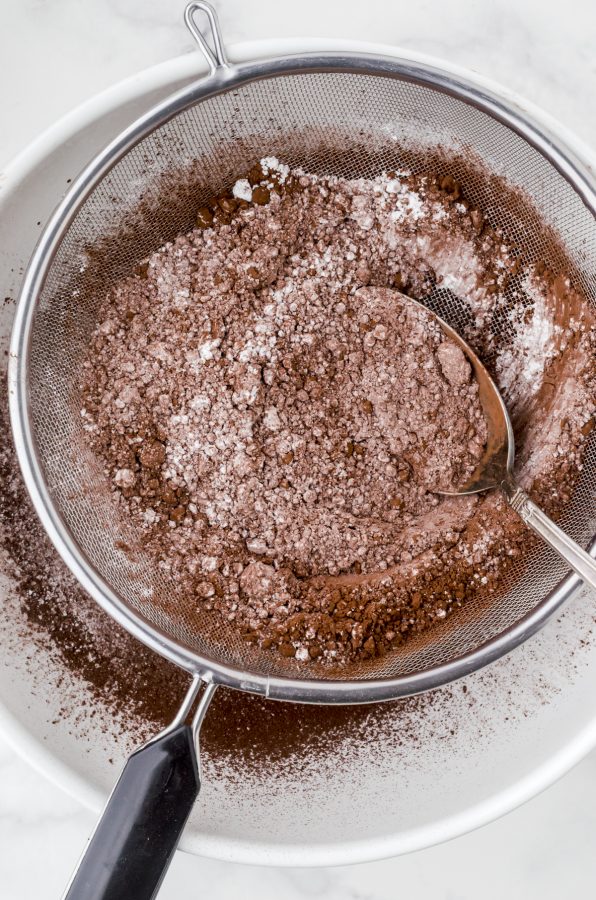
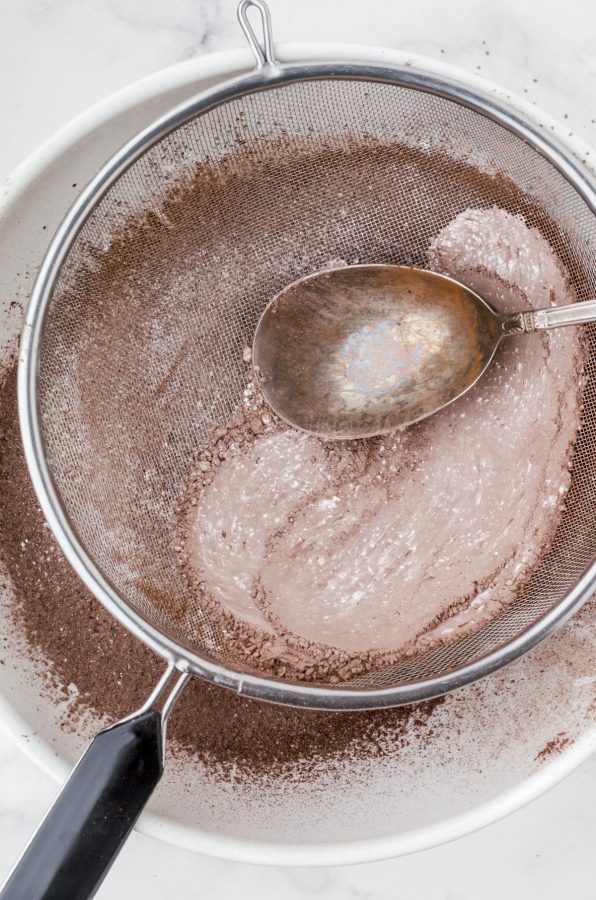
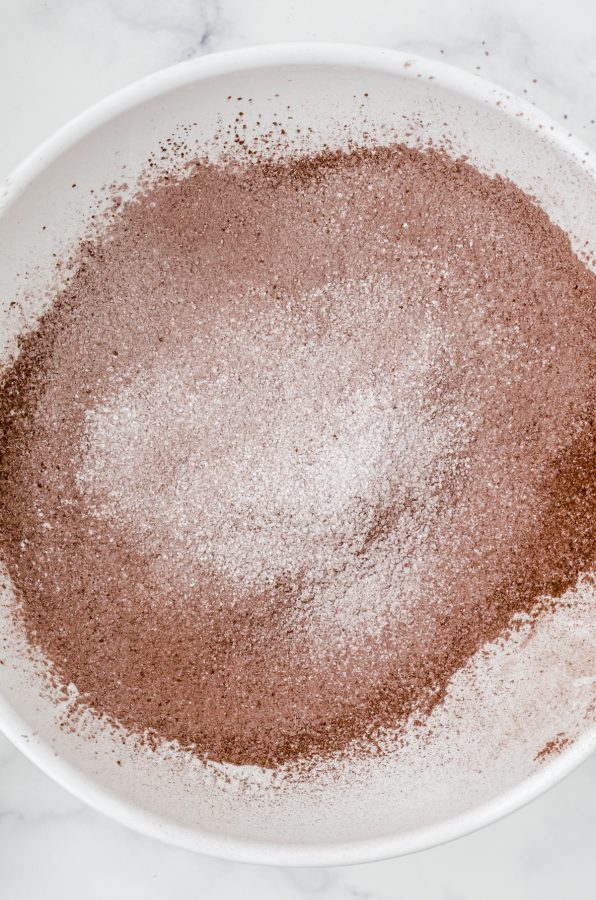
The easiest way to sift flour without a sifter is to apply a fine mesh strainer. Place it over a big bowl and pour flour (or whatever dry ingredients y'all are sifting) into it. Gently milkshake the strainer back and forth & side to side over the basin. Equally the flour (or other dry ingredient) passes through the fine mesh, it becomes a delicate texture. Press the small clumps that form in the mesh lesser of the strainer with a dorsum of a wooden spoon to pause upwardly the lumps.
I find a big fine-mesh strainer is the fastest way to sift dry ingredients, and is much easier than a clunky sifter. In fact, I saw the idea when I was watching a professional chef on telly. Another advantage to this method is that it is so much easier to clean.
ii.Utilise a airship whisk
If you don't have a sifter or a fine strainer – hither'southward a kitchen hack for sifting dry ingredients: Employ a wire whisk.
Simply employ a whisking move in a large mixing bowl with the dry ingredients. The tines of the whisk will break up the larger particles and add in air all at the same time.
Shop Sifter Options
When to measure sifted flour
Sometimes it's confusing to know when to measure sifted flour. Do you measure out information technology before or after it's sifted for an accurate measurement?
The answer to when to mensurate is given in whatever recipe you're post-obit. If information technology says "2 cups of flour", information technology is referring to unsifted flour and doesn't need whatsoever sifting at all. Most recipes these days call for all purpose flour which doesn't require sifting anymore, equally the flour nosotros buy in our store has already been sifted many times during processing.
Still, if a recipe calls for "2 cups sifted flour", and then measure out it later on sifting.
Other Kitchen Hacks and Tips:
- How to freeze cake for easy icing
- Wax paper verses parchment paper
- How to use parchment paper safely in your kitchen
v time & Sanity Saving Dinner ideas
Join our Mailing List & get our 5 about popular dinner ideas sent to your inbox!

Source: https://www.harbourbreezehome.com/how-to-sift-flour/
Posted by: fosterager1944.blogspot.com
0 Response to "How Do I Clean My Flour Sifter"
Post a Comment